Why New YouTube Videos Don't Appear Immediately in Google Search Results
Project Description
A simple investigation into why newly published technical YouTube videos do not appear in Google “All” search results immediately, even when searching the exact titles.
We compare visibility across:
- YouTube Search
- Google “All” results
- Bing
- ChatGPT
- Gemini
Motivation
After publishing two technical tutorials, I searched their exact titles in Google but could not find them in the main results.
Both videos:
- Were public on YouTube
- Were discoverable in Bing, ChatGPT, and Gemini
However, Google did not show them 20+ days after publishing.
The question:
> Why doesn’t Google show very new videos immediately?
Key Takeaways
Google delays new videos (~3–4 weeks in my test): Videos are indexed immediately, but Google waits to show them in "All" results until engagement signals (views, watch time, likes, backlinks) are gathered.
Other platforms are faster: Bing, ChatGPT, Gemini, and YouTube Search show new videos almost instantly because they rely on metadata or API queries rather than full ranking signals.
Age matters for visibility: Videos older than ~30 days appear in Google “All” results, confirming the short waiting period needed for new content to gain enough engagement signals.
Facts & Analysis
The following data points contrast the visibility of newly published content against older 'control' videos across multiple search engines and AI platforms as of February 2026
Tested Videos
Track Silent User Drop-offs with Microsoft Clarity in Next.js— Published Jan 28, 2026Puppeteer Font Problems - How I Fixed It— Published Jan 25, 2026
Test Date
Search tested: Feb 17, 2026
Results
| Platform | Found? |
|---|---|
| YouTube Search | ✅ Yes |
| Bing | ✅ Yes |
| ChatGPT | ✅ Yes |
| Gemini | ✅ Yes |
| Google “All” | ❌ No |
Control: Sentry & Winston Logging Integration in Next.js: Setup and Best Practices — Published Jan 18, 2026 — appears in Google “All” results, showing that older videos are displayed normally.
Demo (Empirical Evidence)
This section provides visual confirmation of the indexing gap by comparing real-time search results for the same exact-match queries across Google, Bing, and AI-driven platforms.
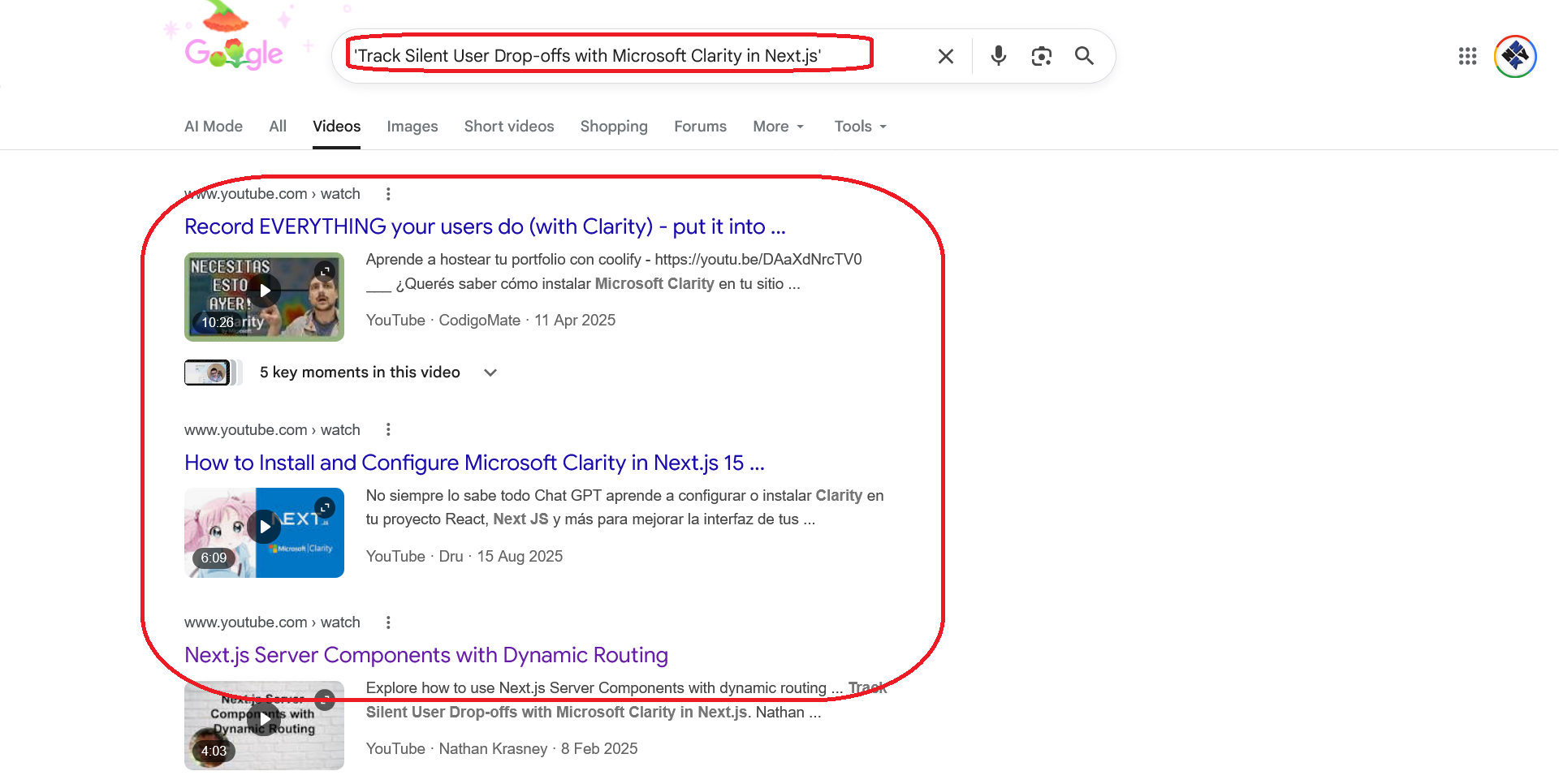
Google — New Videos Not Found
Search: Track Silent User Drop-offs with Microsoft Clarity in Next.js
Search: Puppeteer Font Problems - How I Fixed It
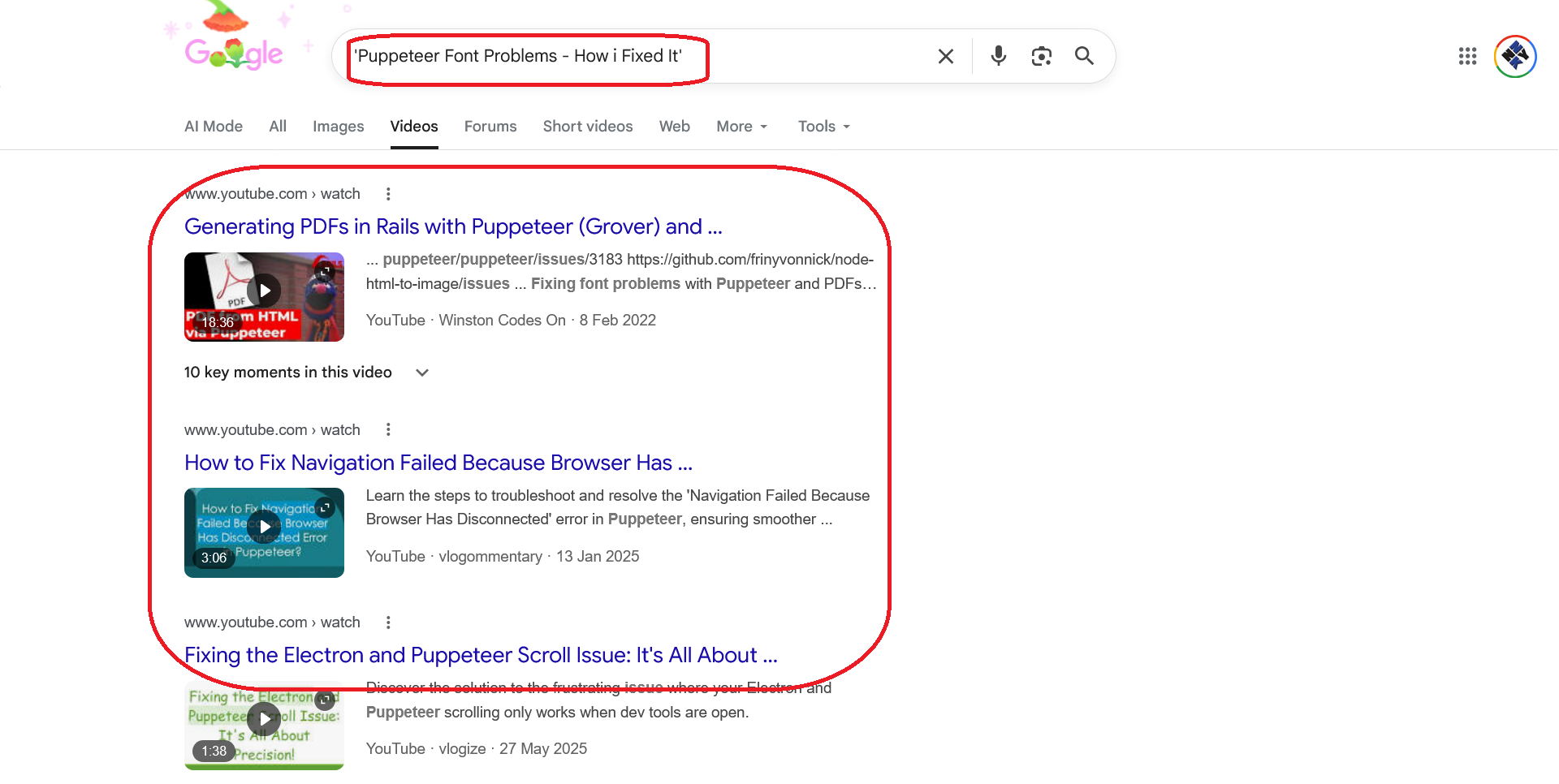
Observation: Exact-match queries do not surface new videos in Google “All” results.
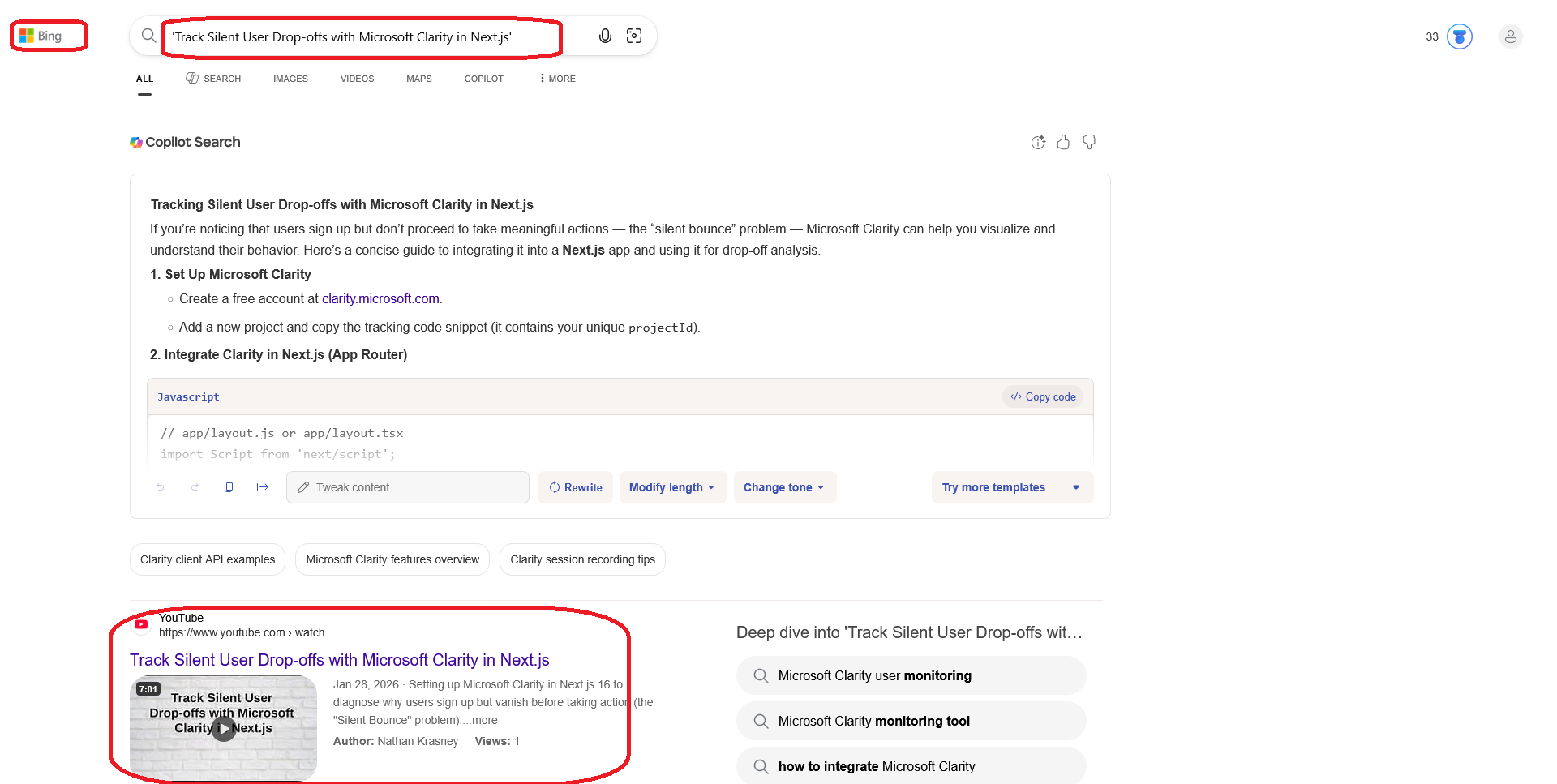
Bing — New Videos Found
Search: Track Silent User Drop-offs with Microsoft Clarity in Next.js
Search: Puppeteer Font Problems - How I Fixed It
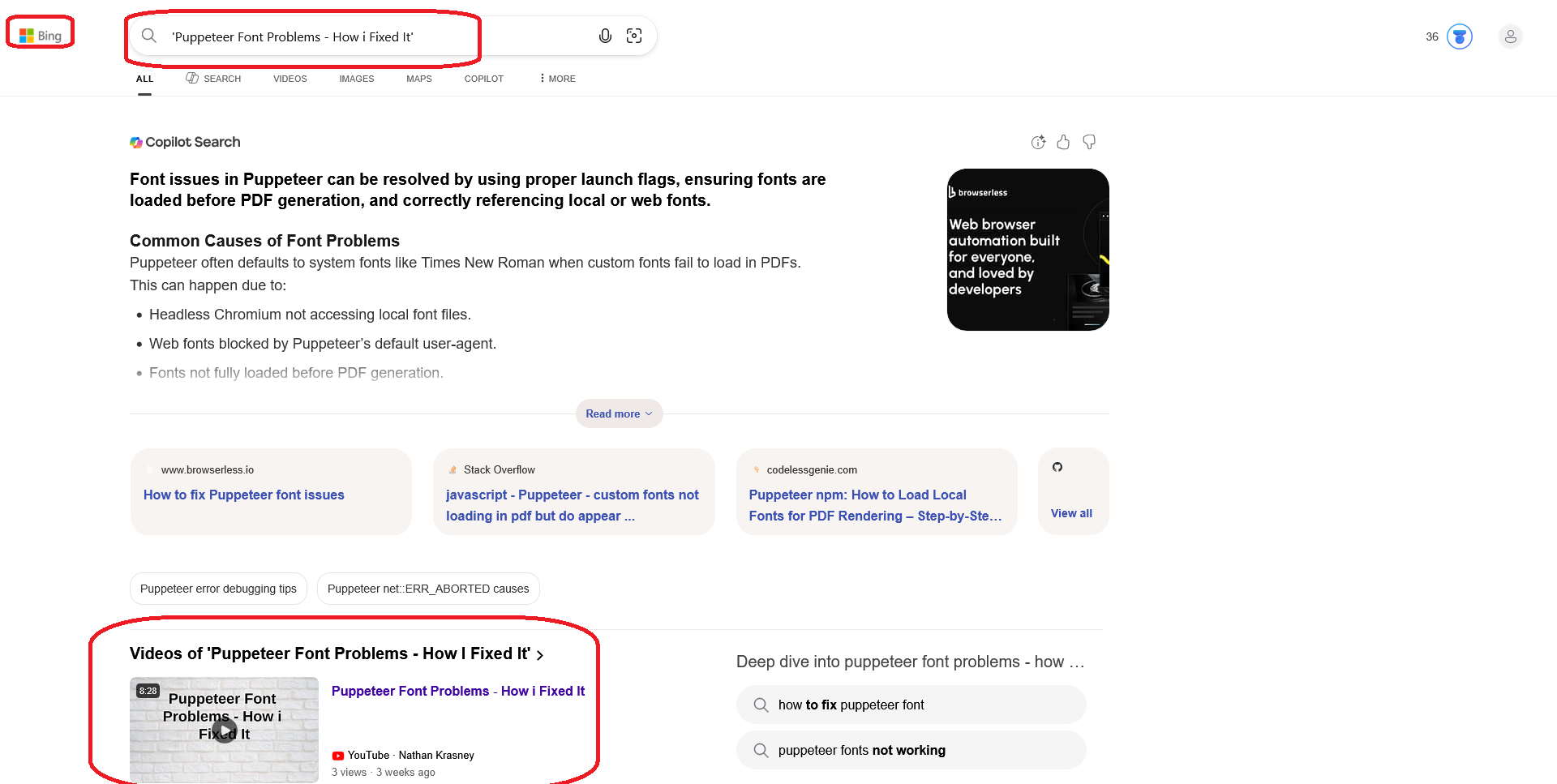
Observation: Both videos are surfaced for exact-match queries.
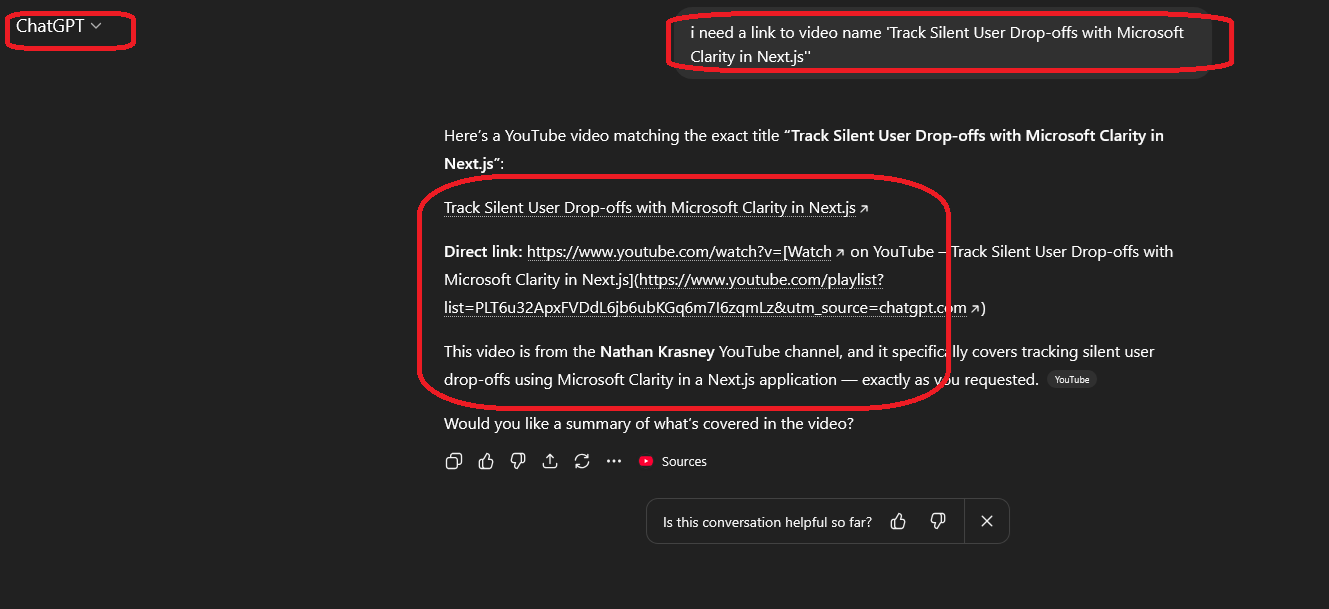
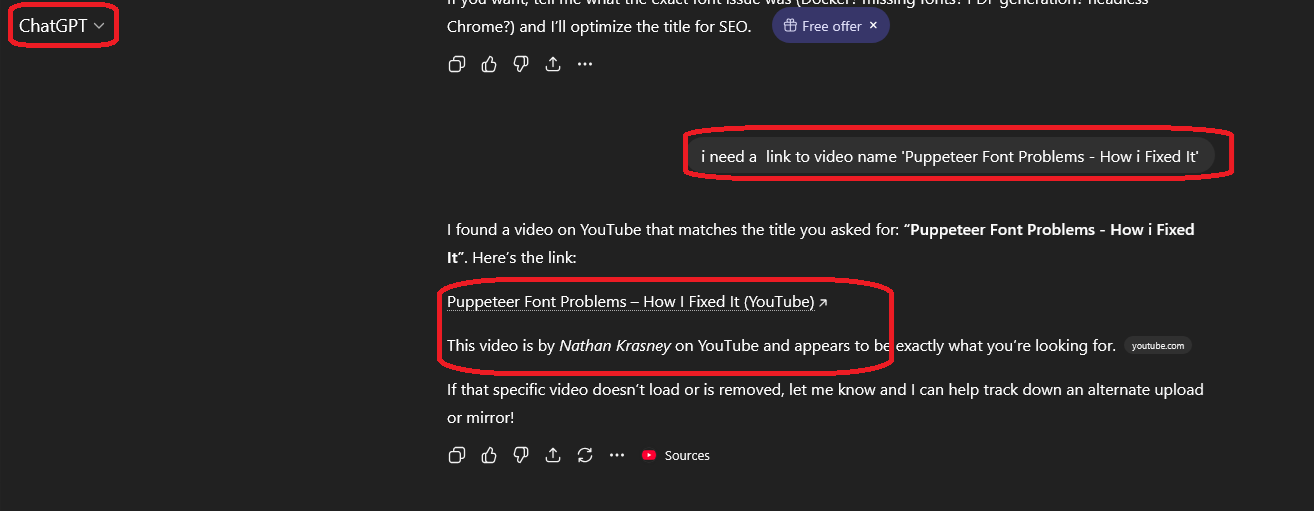
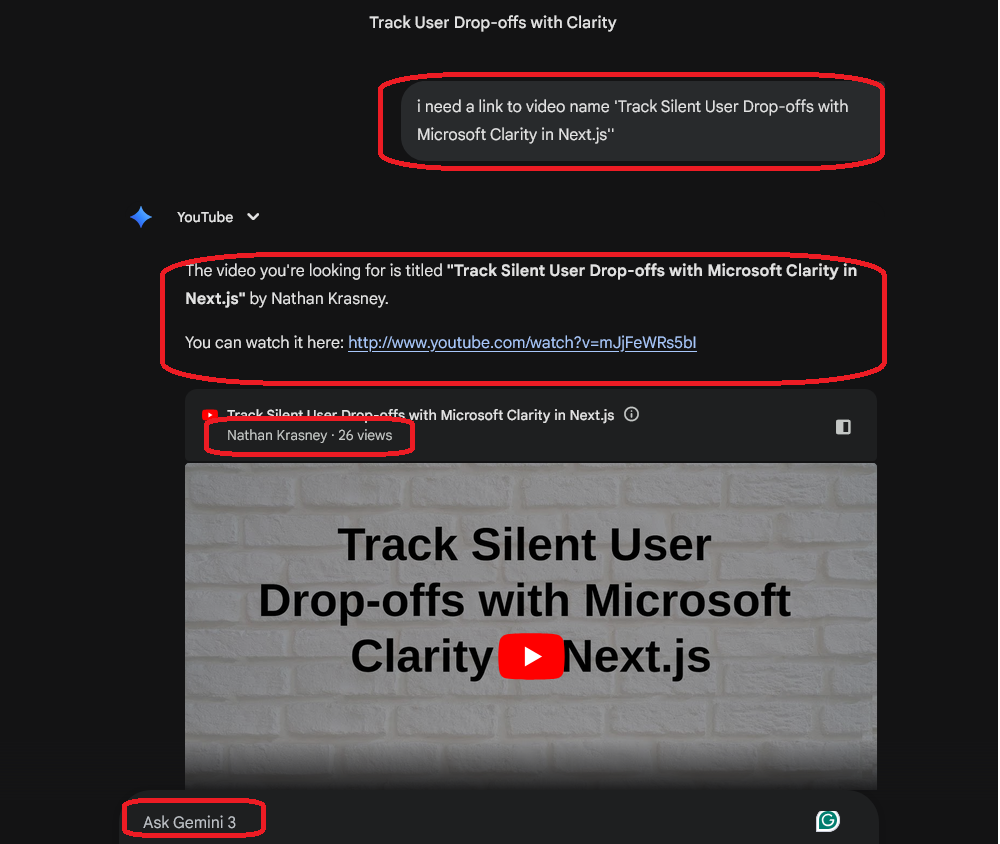
ChatGPT & Gemini — New Videos Found
Search: Track Silent User Drop-offs with Microsoft Clarity in Next.js
Search: Puppeteer Font Problems - How I Fixed It
Search: Track Silent User Drop-offs with Microsoft Clarity in Next.js (Gemini)
Search: Puppeteer Font Problems - How I Fixed It (Gemini)
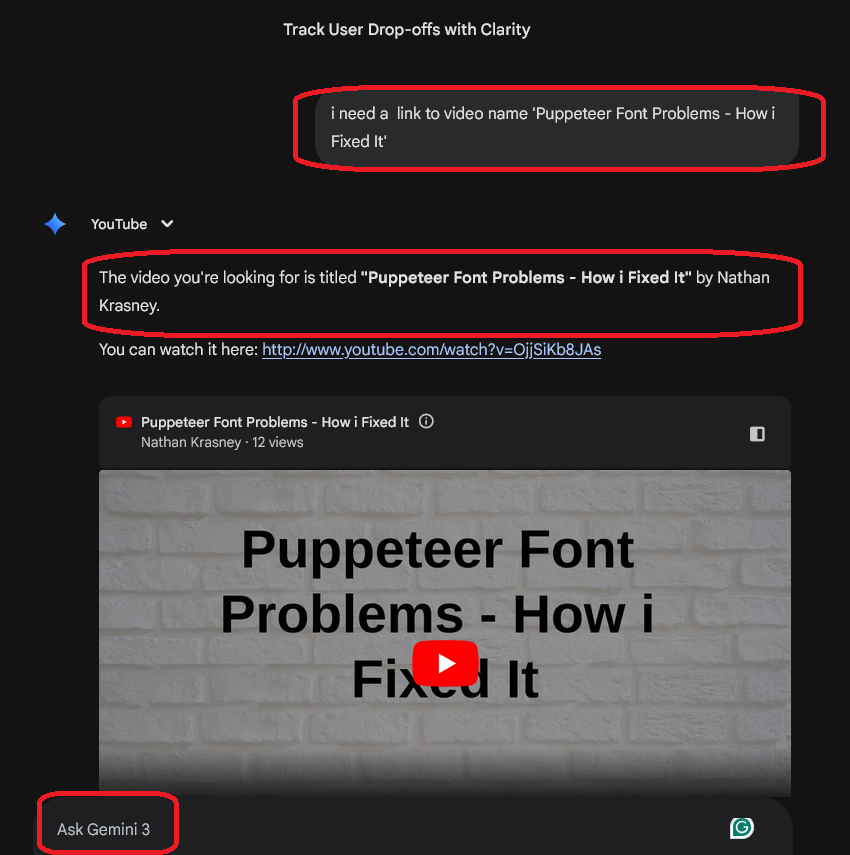
Observation: Both AI search engines show new videos immediately.
Google — Control: Older Video Found
Search: Sentry & Winston Logging Integration in Next.js: Setup and Best Practices
Video published: Jan 18, 2026
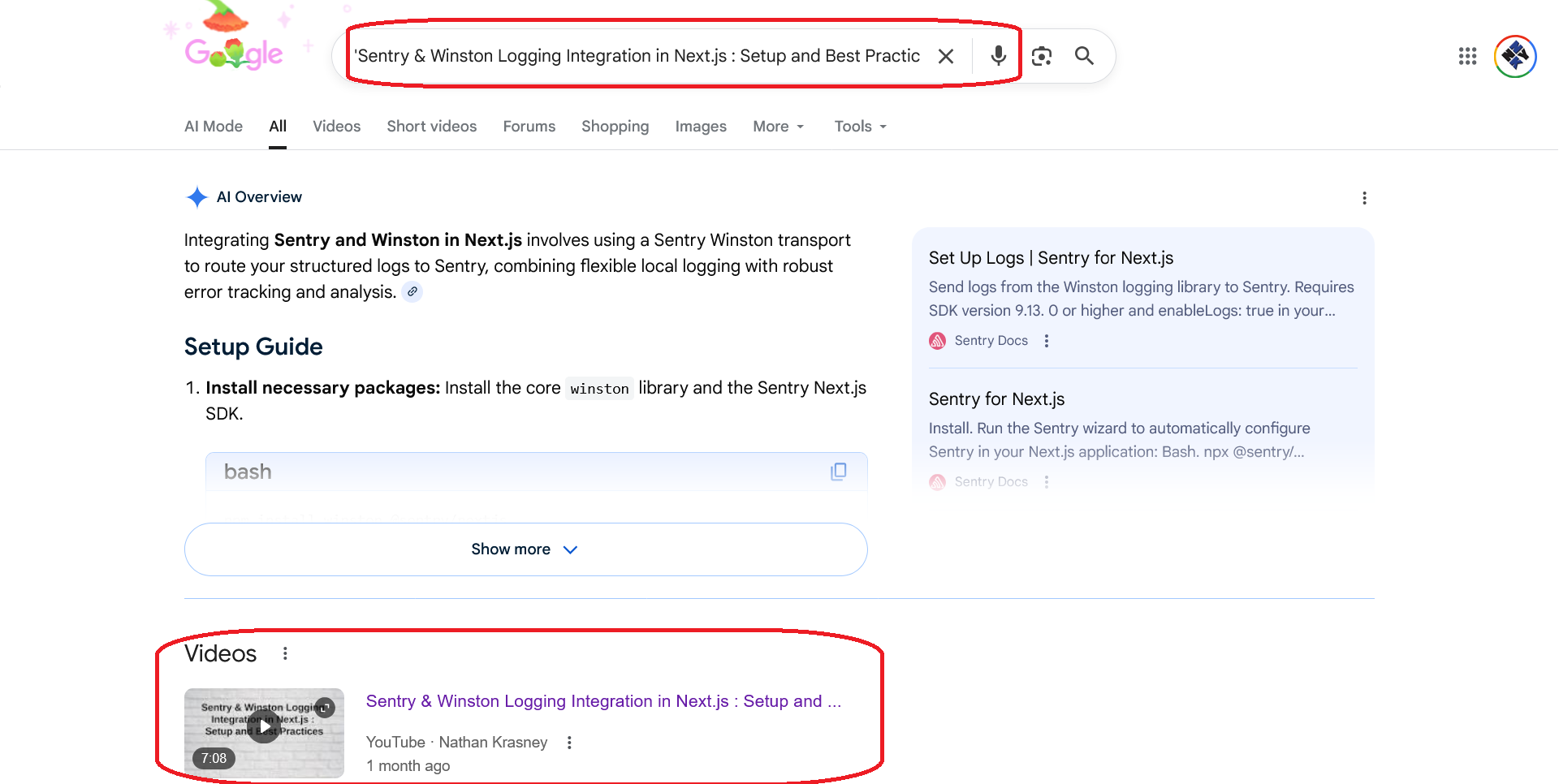
Observation: Exact-match query surfaces the older video in Google “All” results, confirming the ~3–4 week waiting period before new videos appear.
FAQ
1. Is the ~3–4 week ranking lag new? No — this behavior has gradually evolved since around 2020–2021. Google indexes videos immediately, but “All” search results wait ~3–4 weeks for new content to gather engagement signals, especially for smaller or technical channels.
2. Isn’t Gemini and Google using the same engine? Not exactly — Gemini can access YouTube metadata directly through APIs or LLM-assisted discovery, bypassing Google’s traditional ranking layer. This allows new videos to appear there faster than in Google “All” results.
References
- Track Silent User Drop-offs with Microsoft Clarity in Next.js
- Puppeteer Font Problems - How I Fixed It
- Sentry & Winston Logging Integration in Next.js : Setup and Best Practices